
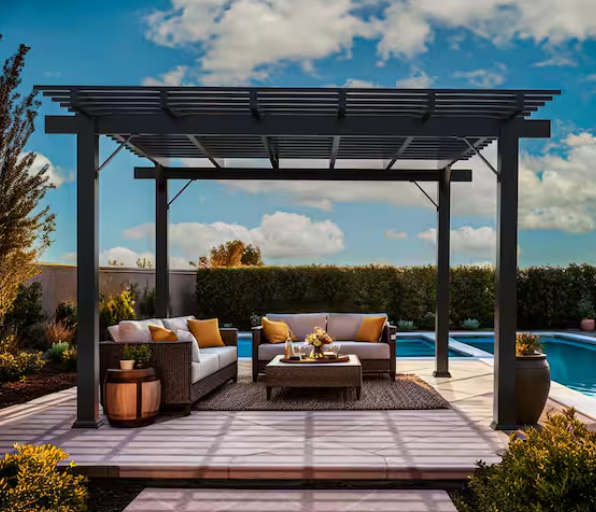
Pergolas come in various types and materials, with aluminum and wood being the most popular choices. Supporters of wood argue that its classic design adds a timeless charm to any space, offering a natural aesthetic. On the other hand, aluminum proponents highlight its strength, durability, and low-maintenance benefits. While wood requires regular upkeep to prevent rot and weathering, aluminum is more resistant to the elements, making it a long-lasting option.
Today, let’s dive into the comparison between Aluminum Pergola vs. Wood Pergola to determine which one is best suited for your home or outdoor space, considering factors like design, maintenance, and durability.
Material Comparison: Aluminum vs. Wood
When comparing aluminum pergolas to wood pergolas, the primary factors to consider are durability, maintenance, and aesthetic appeal.
Aluminum Pergolas:
Aluminum pergolas are known for their durability and resistance to weather elements. They are built to withstand harsh weather conditions such as rain, snow, and high humidity without rusting, rotting, or deteriorating. This makes them an excellent choice for regions with extreme climates. Aluminum is lightweight, which makes installation easier and less expensive compared to heavier materials like wood. Additionally, aluminum pergolas require minimal maintenance, mainly involving occasional cleaning. They also come in a wide variety of modern aesthetic options, from sleek and minimalistic to more intricate designs, making them ideal for contemporary homes or commercial spaces.
Wood Pergolas:
Wood pergolas, on the other hand, have a natural appeal and a classic aesthetic that many homeowners love. They add warmth and charm to any outdoor space, often complementing traditional or rustic home designs. Wood is sturdy and can be easily customized, allowing for intricate carvings, patterns, or even built-in seating. This flexibility makes wood a favorite for those looking to add a personalized touch to their outdoor spaces. However, wood requires regular maintenance such as sealing, staining, or painting to protect it from weather damage, rot, and pests. Without proper care, wood pergolas can degrade faster than their aluminum counterparts.
In conclusion, aluminum pergolas are low-maintenance and highly durable, whereas wood pergolas offer classic beauty and customization but require more care to maintain their appearance.
Cost Considerations
In this section, we will discuss the cost aspect, which is a key concern for many people with limited budgets. The cost of aluminum pergolas versus wood pergolas involves several factors, including initial investment, long-term value, and ongoing maintenance costs.
Aluminum Pergola Costs:
Aluminum pergolas typically have a higher initial investment compared to wood. The material is lightweight and durable, making it an excellent option for long-term use. However, the price for aluminum pergolas includes not just the material cost but also the manufacturing and installation costs. One of the main advantages of aluminum is its long-term value. Due to its resistance to rust, rot, and corrosion, it requires very little maintenance over time, which can save money in the long run. Aluminum pergolas also maintain their aesthetic appeal without needing frequent repairs or refinishing, making them a cost-effective choice in the long term.
Wood Pergola Costs:
Wood pergolas often have a lower initial cost than aluminum, especially if you opt for more affordable wood types. However, while wood might be less expensive initially, the material and installation costs can increase over time due to the need for regular maintenance. Wood requires ongoing care, such as staining, sealing, and painting, to protect it from the elements, which adds to long-term costs. That being said, wood can last a long time, often much longer than expected. In fact, with proper care, wooden pergolas can outlast a human lifetime. Moreover, as wood ages, it often develops a more beautiful and unique appearance, adding character to your outdoor space.
Ultimately, while wood may have higher maintenance costs, its aesthetic appeal and long-term durability can make it a worthwhile investment. Aluminum, on the other hand, offers a more budget-friendly option in terms of upkeep but may come at a higher initial cost.
Aesthetic and Design Flexibility
There are some differences in aesthetic appeal and design flexibility between the two. Allow me to briefly explain the differences between Aluminum Pergolas and Wood Pergolas in this regard.
Aluminum Pergolas:
Aluminum pergolas are known for their sleek, contemporary look. The smooth finish and modern lines make them ideal for modern homes or commercial spaces with a minimalist design. Aluminum is highly versatile in terms of colors and finishes, allowing for a range of styles from matte to glossy, as well as a variety of powder-coated colors to match any exterior decor. The material is also lightweight and flexible, which means it can be shaped into different designs, from simple geometric shapes to more complex, artistic frameworks. Additionally, aluminum pergolas can be equipped with adjustable louvers or retractable roofs, offering not just functionality but also a modern, clean aesthetic.
Wood Pergolas:
On the other hand, wood brings a traditional, rustic charm that many homeowners adore. The natural texture and warmth of wood create a welcoming, earthy atmosphere, making it an ideal choice for those with traditional, Mediterranean, or cottage-style homes. Wood can be customized in various ways, from being stained to highlight the grain, to being carved or shaped into intricate patterns. With wood, the possibilities for design are endless, allowing for personalized touches and a sense of craftsmanship. Whether you prefer a simple, natural look or more elaborate, custom details, wood offers significant design flexibility.
Both materials have unique aesthetic benefits, with aluminum leaning towards modern and sleek designs, while wood offers timeless beauty and personalization. Your choice will depend on the overall style of your outdoor space and personal preferences.
Maintenance Requirements: Aluminum vs. Wood
When it comes to maintenance requirements, aluminum and wood pergolas present very different needs, with each material offering distinct advantages and challenges.
Aluminum Pergolas:
One of the key benefits of aluminum pergolas is their minimal upkeep. Aluminum is naturally resistant to rust, rot, and insects, which makes it an ideal choice for homeowners looking for a low-maintenance solution. Unlike wood, aluminum does not need to be regularly treated or repainted to protect it from the elements. The material is designed to withstand harsh weather conditions such as rain, snow, and high humidity without deteriorating. Occasional cleaning with soap and water is typically all that’s required to maintain its appearance. The resilience of aluminum against corrosion means that it remains structurally sound and visually appealing for many years with very little effort from the homeowner.
Wood Pergolas:
In contrast, wood pergolas require regular sealing, painting, and treatment to prevent damage from moisture, sun exposure, and insects. Over time, wood can rot, warp, or crack if not properly maintained. This makes wood pergolas more labor-intensive in terms of upkeep. Homeowners must periodically apply protective coatings, such as wood sealants or paints, to protect the structure from the elements and maintain its appearance. In addition, wood is vulnerable to termites and other pests, requiring treatments to prevent infestations. While wood provides a beautiful, natural aesthetic, it does require more attention to keep it in good condition compared to aluminum.
In summary, if you’re looking for a low-maintenance pergola, aluminum is the superior choice. However, if you appreciate the beauty and customization of wood, be prepared for regular upkeep to preserve its integrity.
Weather Resistance and Longevity
When comparing the weather resistance and longevity of aluminum and wood pergolas, both materials have their strengths and weaknesses, which affect their suitability for different climates and long-term durability.
Aluminum Pergolas:
One of the greatest advantages of aluminum pergolas is their excellent resistance to weather elements. Aluminum is inherently resistant to rain, snow, and UV rays, making it a great option for areas with harsh weather conditions. Unlike wood, aluminum does not absorb moisture, which means it won’t warp, swell, or rot over time. Additionally, aluminum pergolas are highly resistant to corrosion, even in coastal areas with salty air. UV rays can damage many materials, but aluminum has been treated to withstand these harmful rays, ensuring it doesn’t fade, crack, or degrade under direct sunlight. This resilience ensures that aluminum pergolas maintain their structural integrity and aesthetic appeal for many years with little maintenance. They offer long-lasting performance without the need for constant care or replacement.
Wood Pergolas:
In contrast, wood pergolas are more vulnerable to the elements. Wood is highly susceptible to moisture from rain and snow, which can lead to swelling, warping, and rot. Over time, if not properly maintained, wood can degrade under constant exposure to these conditions. Termites and other pests can also cause significant damage, making regular treatments necessary. Additionally, wood pergolas are prone to weathering due to UV exposure, which can cause fading and degradation of the wood’s surface. Without proper sealing and treatment, wood pergolas may not last as long as their aluminum counterparts, especially in regions with high humidity or extreme weather conditions.
In conclusion, aluminum pergolas provide superior weather resistance and are ideal for long-term durability, while wood pergolas require more frequent maintenance to prevent damage from moisture, pests, and weathering.
Final Thoughts
In between an aluminum and wood pergola for your home, several factors come into play, such as budget, aesthetic preferences, and maintenance willingness.
Aluminum pergolas tend to have a higher initial cost, but their low-maintenance nature makes them a cost-effective long-term option. Wood, on the other hand, offers a classic, rustic look at a lower upfront price, but it requires more maintenance, such as sealing, painting, and pest control, which can add to long-term costs. Check Top 10 Popular Aluminum Pergola
Consider your local climate when making a decision. Aluminum excels in areas with harsh weather conditions, offering resistance to rust, corrosion, and UV damage. Wood is best for milder climates where it can be maintained properly. Finding a reliable custom aluminum pergola manufacturer can help you make an informed decision and ensure a structure that suits both your style and functional needs.




 English
  Spanish
  French
  Russian
  Indonesian
  Thai
Thai  Arabic
  German