
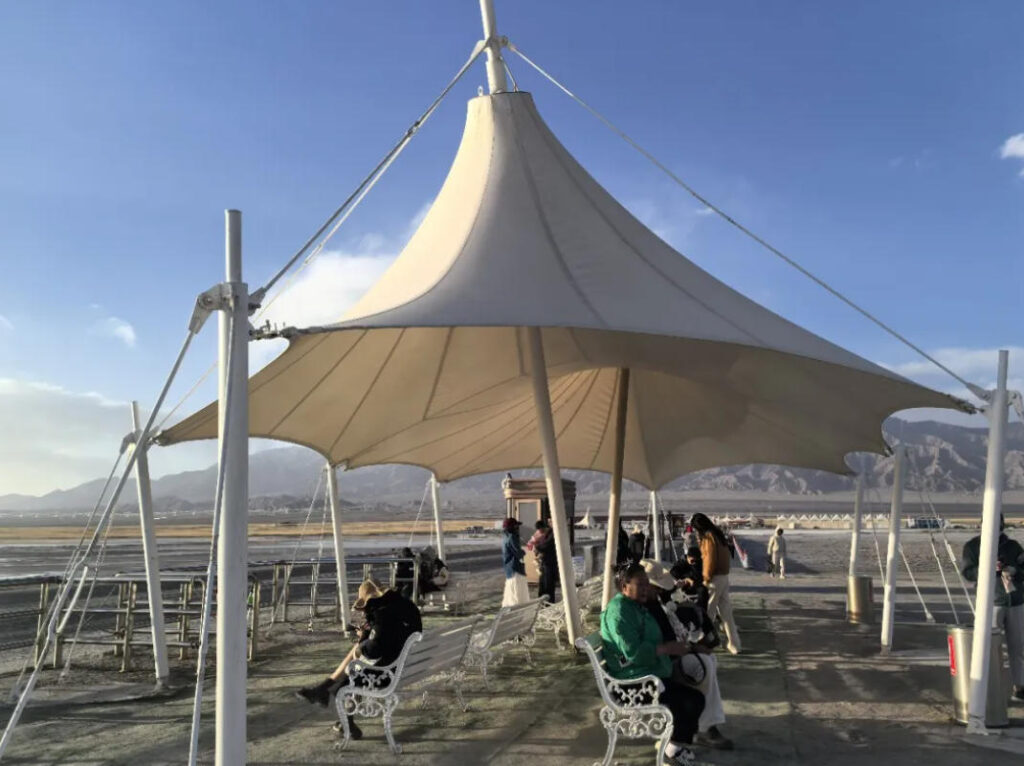
The conical tensile structure is one of the most popular and widely adopted forms of tensile architecture around the world. Recognized for its elegant cone-shaped design, it combines both aesthetic appeal and practical functionality. This type of structure is commonly seen in public spaces such as parks, stadiums, resorts, shopping centers, and transportation hubs. Its high central point allows for excellent rainwater drainage, natural ventilation, and sun protection, making it ideal for a variety of climates. Thanks to its versatility and structural stability, many countries choose conical tensile structures as a reliable solution for shade and shelter. In this article, we will explore the key features and common applications of conical tensile structures in modern construction.
What Is a Conical Tensile Structure?
A conical tensile structure is a type of tensioned fabric structure characterized by its cone-like shape, where the fabric membrane is stretched from a central high point outward to the perimeter. Typically supported by a central mast and tensioned by cables or steel supports around the edges, this form distributes loads efficiently while creating visual impact.
You can think of it like an open umbrella. The central pole supports the structure, while the fabric stretches outward, naturally guiding water down to the edges—making it highly effective for drainage. This design also helps resist wind loads and provides excellent structural stability through tension.
Due to its simplicity, functionality, and iconic appearance, the conical tensile structure is widely used in stadium stands, shopping plazas, park pavilions, and car parking canopies across many countries.
Key Design Features Of Conical Tensile Structure
After understanding the basic concept of conical tensile structures, let’s explore the key design features that make this type so popular around the world. Its appeal lies not only in the distinctive appearance but also in the scientific principles behind its form and material composition.
At the heart of the design is the central mast, which supports the membrane and evenly distributes tension across the structure. This downward tension creates a curved conical surface that enhances both wind resistance and water drainage. The natural slope formed by the cone shape allows rainwater to flow efficiently off the surface, while the tensioned fabric maintains structural integrity under environmental stress.
In terms of materials, the membrane is typically made from durable, weather-resistant PVC or PTFE fabric. These materials offer a balance of strength, light weight, and translucency, providing both shading and natural lighting. The supporting framework usually consists of galvanized or stainless steel, ensuring long-term durability and safety.
By combining aesthetic appeal with practical performance, conical tensile structures are not only functional coverings but also iconic architectural elements. They are widely used in public plazas, transport hubs, school playgrounds, exhibition spaces, and other open-air venues.
Common Applications Of Conical Tensile Structure
Having examined the structural features and material advantages of conical tensile structures, it’s clear why this design has become a go-to choice for a wide range of architectural and functional applications. The iconic cone shape not only offers efficient tension distribution and drainage but also brings a visually striking aesthetic that suits both modern and traditional environments.
One of the most common uses of conical tensile structures is in outdoor canopies and gazebos, where they provide shade, shelter, and an attractive focal point. Parks, playgrounds, and public plazas frequently use these structures to enhance comfort while maintaining open-air ambiance.
Stadium entrances and walkway coverings also benefit greatly from the conical design. The central mast and tensioned membrane create large, column-free spans ideal for managing pedestrian flow and weather protection. At Jieol, we have implemented this structure in many sports facility projects. For instance, our tensile membrane roof project in the Philippines for the Selavista Sports Arena is a prime example of how conical shapes can elegantly cover large entrance zones.
Additionally, conical tensile structures are widely adopted for car parking shades, especially in commercial and resort settings, offering durable UV and weather protection with minimal visual obstruction. Their blend of functionality and design also makes them popular in resorts and leisure venues, where architectural style matters just as much as practicality.
Overall, conical tensile structures are versatile, scalable, and suitable for a wide range of public and private spaces.
Advantages Over Traditional Roof Structures
Compared to traditional roofing systems, conical tensile structures offer several distinct advantages.
First, they are lightweight yet highly durable. By utilizing high-performance membrane materials like PVC or PTFE, along with precision-engineered steel cables or frames, these structures achieve exceptional tensile strength while keeping the overall weight low. This ensures excellent structural stability, even under high wind loads or environmental stress.
Second, conical tensile designs are extremely cost-effective, especially for covering large-span areas. Unlike reinforced concrete or heavy steel roofing systems, tensile structures require fewer materials and simpler installation processes—reducing overall costs significantly without compromising strength or durability. For example, one of our clients in Indonesia opted for our conical tensile solution for a stadium canopy. After comparing alternatives, he reported that our proposal helped him save at least 50% on total project costs—while delivering a faster timeline and a more attractive design.
Third, these structures offer quick installation and minimal maintenance. Most of the membrane materials are prefabricated in factories, enabling rapid on-site assembly with minimal disruption. Additionally, the membrane surfaces are typically self-cleaning and resistant to dust accumulation, which keeps maintenance needs low. The expected lifespan of such materials ranges from 15 to 30 years.
In summary, conical tensile structures outperform traditional roofing in strength, aesthetics, cost-efficiency, and construction speed—making them an ideal solution for modern architectural needs.
Case Study Of Conical Tensile Structure
Case Study: Iconic Conical Tensile Structure in Brisbane, Australia
One standout example of a conical tensile structure in real-world application is the iconic project completed by Jieol in Brisbane, Australia. This high-visibility structure was designed as a central architectural feature for a public outdoor space, offering both shade and visual impact. The project showcased a large conical membrane supported by a single central mast, delivering efficient water drainage and maximizing unobstructed space beneath.
Using durable PTFE-Gewebe and galvanized steel components, the structure was engineered to withstand Australia’s harsh sun and heavy rainfall. The sleek, futuristic form not only provided essential weather protection but also enhanced the area’s aesthetic appeal, attracting foot traffic and elevating the site’s visual identity.
The success of this project demonstrates the versatility and global relevance of conical tensile structures. Whether in Australia, the UAE, India, oder Saudi Arabia, these structures are increasingly favored in both commercial and public applications for their cost-efficiency, durability, and striking design. At Jieol, we specialize in adapting such structures to suit local climates, regulations, and cultural aesthetics—making each project uniquely effective and visually iconic.



 German
  English
  Spanish
  French
  Russian
  Indonesian
  Thai
Thai  Arabic