

Tension fabric structures have become a popular choice for cost-effective construction, offering durability, flexibility, and aesthetic appeal. But do you really know how much they cost?
If you’re planning a tension fabric structure project, understanding the full cost breakdown is essential for making smart, budget-conscious decisions. From materials and frame types to installation and hidden expenses, each factor plays a role in the final price. Whether for industrial storage, events, or sports facilities, knowing the cost details upfront can help you save money and avoid surprises. In this guide, we’ll walk you through everything you need to know about pricing.
Key Factors That Influence the Cost of Tension Fabric Structures
When planning a tension fabric structure project, understanding the core cost factors is crucial for budget control and value optimization. These structures are known for being economical, but their final price can vary significantly depending on materials, design, and site conditions. Below are five key aspects that will directly impact your total investment.
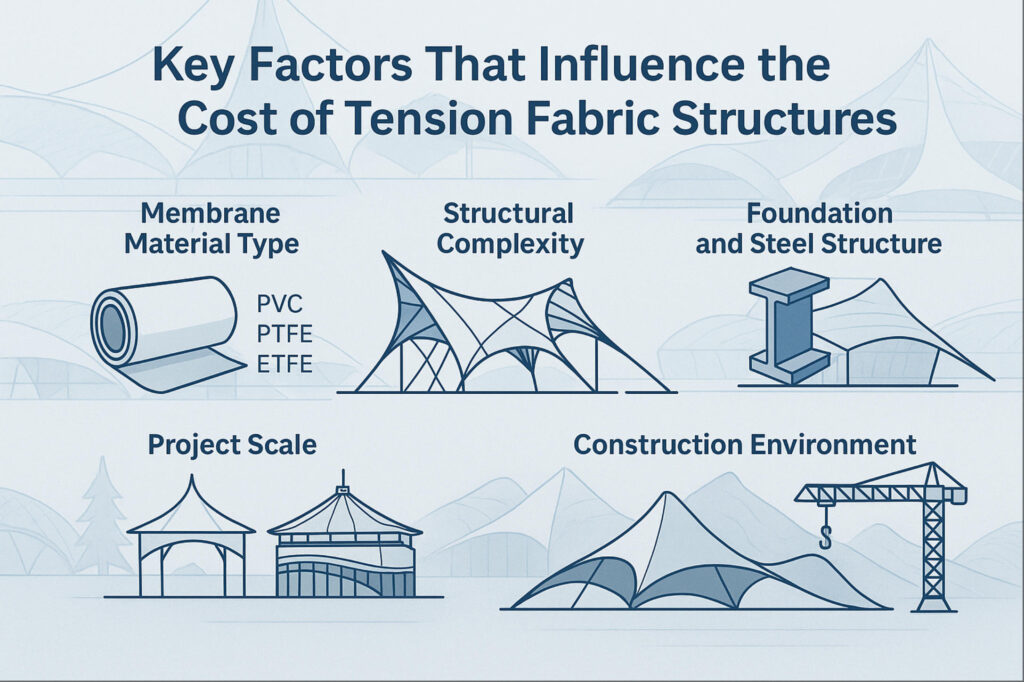
1. Membrane Material Type
The membrane material is one of the largest contributors to the overall cost of a tensile fabric structure. PVC-coated fabrics are the most affordable option, typically priced between $40–$110 per square meter, offering a service life of 5 to 10 years. PTFE (Polytetrafluoroethylene) membranes fall into the premium category, ranging from $140–$280/m². They are known for their exceptional strength, self-cleaning properties, and a lifespan of over 20 years. ETFE membranes, often used in iconic projects such as the Beijing “Water Cube,” are the most high-end, costing approximately $210–$420/m². ETFE offers superior light transmission, making it ideal for stadiums, airports, and modern commercial landmarks. (For comparison, see PTFE vs ETFE)
2. Structural Complexity
The more complex the design, the higher the cost. Basic shapes such as domes or umbrellas are relatively low-cost because of simple support structures and minimal labor. In contrast, complex architectural forms like double-curved surfaces or multi-node tension systems require precision engineering, custom steelwork, and more skilled labor, driving up both material and fabrication costs.
3. Project Scale
Larger projects tend to benefit from scale, with the per-square-meter cost often decreasing as total area increases. For example, a large stadium roof may be more cost-efficient per unit than a small landscape pavilion. However, small-scale projects may experience higher unit costs due to fixed expenses like design, equipment mobilization, and labor setup that don’t scale down proportionally.
4. Foundation and Steel Structure
Your cost will also depend on whether you need a new foundation or reinforcement of an existing one. Additionally, the type and amount of steel used (such as Q235 or Q345) significantly affect the budget. Thicker, high-grade steel and complex truss systems mean higher raw material costs and additional fabrication labor.
5. Construction Environment
Site conditions play a big role in determining overall cost. Projects that involve high-altitude work, narrow job sites, or difficult access will require more time, special equipment, and skilled workers. These challenges increase not just labor expenses but also insurance and safety costs, which must be factored into the final budget.
Understanding these five factors will give you a clearer picture of what drives costs in tension fabric structure projects, helping you make informed, cost-effective decisions.
Tinjauan Biaya Struktur Kain Tarik
To help you better understand tensile fabric structures, this section will explore specific real-world cases to give you a clearer picture of the actual costs involved. Whether you’re planning a small canopy or a large-span stadium roof, knowing the average price range per square meter can help you estimate your project budget accurately. We’ll also touch on long-term maintenance expenses, which vary depending on the membrane material you choose—PVC requires regular upkeep, while PTFE offers lower maintenance over time. With these practical examples, you’ll be able to assess both initial and ongoing costs for your tensile fabric structure project.
Design Fees
Typically, design costs account for about 5%–10% of the total project cost. For complex structures—especially those with irregular shapes or high-performance requirements—engineering simulations, wind load analysis, and structural calculations are often necessary, which can drive up design fees.
Transportation and Installation
Logistics also play a role in your budget. If your project is located in a remote area or involves imported materials like ETFE, expect higher shipping and handling costs. Additionally, installation complexity—especially for large-span or high-altitude projects—can lead to increased labor and equipment expenses.
Maintenance Costs
Long-term upkeep should not be overlooked. PVC membranes, while affordable upfront, require regular cleaning and protective coating maintenance to ensure longevity. PTFE membranes, on the other hand, are more resistant to dirt and UV damage, resulting in lower maintenance costs over their lifespan.
Reference Case Costs (USD)
- Carports / Small Canopies: $100–$200/m² — PVC membrane with simple steel frames.
- Stadium Roofs: $230–$500/m² — PTFE membrane combined with large-span space frame systems.
- Commercial Plazas / Art Installations: $400/m² and above — Often involve customized, non-standard shapes and premium materials.
Comparing Custom vs Pre-Engineered Solutions
Just like choosing between a tailored suit and an off-the-rack option, tensile fabric structures also offer two primary approaches—custom-designed solutions dan pre-engineered systems. The differences between the two are not just about appearance and performance, but also about budget, timeline, and long-term value. Based on our experience in multiple projects, including a cost-efficient tennis court membrane structure we delivered in the Panama, here’s how they compare.
| Comparison Item | Custom Solution | Pre-Engineered Solution |
| Initial Cost | High (expensive design, materials, and construction) | Low (standardized modules greatly reduce costs) |
| Long-Term Cost | Low maintenance, long lifespan, potentially lower total cost | Requires periodic membrane replacement, higher cumulative cost |
| Expandability | Difficult to adjust; high modification costs | Modular design allows easy expansion or reconfiguration |
| Budget Fit | Best for high-budget, long-term projects | Ideal for low-budget, short-term or temporary needs |
For landmark buildings—such as religious architecture in Arab countries—custom-designed tensile fabric structures are highly recommended. These projects often require unique shapes, culturally specific aesthetics, and premium materials like PTFE or ETFE to achieve both symbolic and functional goals. Customization ensures the design aligns with the building’s identity and long-term durability.
In contrast, for more common and budget-sensitive applications like parking lot shade structures or commercial canopies, pre-engineered solutions are a smart choice. Their modular design, faster lead times, and lower initial cost make them ideal for large-scale deployment. Choosing the right approach depends on your project’s purpose, visual requirements, and financial constraints. For functionality and savings, pre-engineered; for prestige and permanence, go custom.
How to Get an Accurate Quote From Manufacturers
As the saying goes, “know better, get better.” If you want to receive exactly what you need, you must first clearly understand and define your requirements. When working with a produsen struktur membran tarik, providing detailed and accurate information is essential. Whether it’s the size, design, material preferences, or installation environment, clear communication will ensure you get a precise and reliable quote. Otherwise, vague or incomplete descriptions can lead to confusion, delays, or unexpected costs. Taking the time to describe your project properly from the start is the key to successful cooperation and achieving the best results for your investment.
What Information Do Suppliers Need?
To receive a precise and reliable quote, be prepared to provide the following key details:
- Design Drawings (if available): Include structure type, dimensions, and load requirements. This greatly reduces back-and-forth in the design stage.
- Site Conditions: Ground foundation, surrounding environment (wind or snow load), and construction challenges (e.g., high-altitude installation).
- Usage Purpose: Is it for commercial shading, industrial storage, or a permanent building? The intended use directly affects material and structural choices.
Example:
“We plan to build a 200m² PTFE membrane warehouse in an industrial park. The ground is already paved, and the structure must withstand wind speeds up to Beaufort scale 12. Please provide a detailed quote.”
Negotiation Tips: How to Get a Better Price
- Compare Multiple Suppliers: Request quotes from 3–5 providers. Pay attention to material brands (e.g., DuPont PTFE vs. local alternatives) and construction experience.
- Request Itemized Pricing: Ask for a cost breakdown (membrane, steel structure, installation, transport) to avoid hidden charges.
- Flexible Timeline: Allowing off-season installation or flexible scheduling can reduce labor costs.
- Long-Term Partnership: Indicate bulk purchases or future project intentions to secure better pricing.
Daisy Advice:
Be cautious of quotes that are significantly below market average—they may involve material substitution or compromised structural safety. Always confirm specifications and verify the supplier’s reputation.
Conclusion: Is It Worth the Investment?
Tensile fabric structures are more than just an architectural trend—they are a smart investment, especially for commercial and industrial applications. Their return on investment (ROI) sering kali direalisasikan melalui penghematan biaya bahan, waktu pemasangan yang lebih cepat, dan berkurangnya perawatan selama masa pakai struktur. Baik digunakan untuk gudang, fasilitas olahraga, atau peneduh komersial, struktur ini memberikan nilai fungsional yang tinggi dengan estetika modern.
Dalam hal daya tahan dan fleksibilitasbahan membran berkualitas tinggi seperti PTFE dan ETFE dapat bertahan lebih dari 20 tahun dengan perawatan minimal, sementara PVC memberikan opsi yang lebih ramah anggaran untuk penggunaan jangka pendek. Desain modular dan ringan juga memungkinkan penyebaran, relokasi, atau perluasan yang cepat-menjadikannya ideal untuk kebutuhan bisnis yang terus berkembang.
Untuk memaksimalkan anggaran Anda, ikuti beberapa strategi utama:
- Bandingkan penawaran dari beberapa pemasok berpengalaman.
- Tentukan dengan jelas ukuran, tujuan, dan kondisi lokasi proyek Anda.
- Pilih bahan membran yang tepat berdasarkan fungsi dan masa pakai.
- Pertimbangkan kemungkinan perluasan di masa depan dan biaya pemeliharaan di muka.
Singkatnya, struktur kain tarik menawarkan keseimbangan yang menarik dari efisiensi biaya, keserbagunaan, dan umur panjang. Dengan perencanaan yang tepat dan mitra yang tepat, mereka dapat menjadi investasi yang sangat berharga yang memenuhi tujuan operasional dan keuangan Anda.


 Indonesian
  English
  Spanish
  French
  Russian
  Thai
Thai  Arabic
  German