
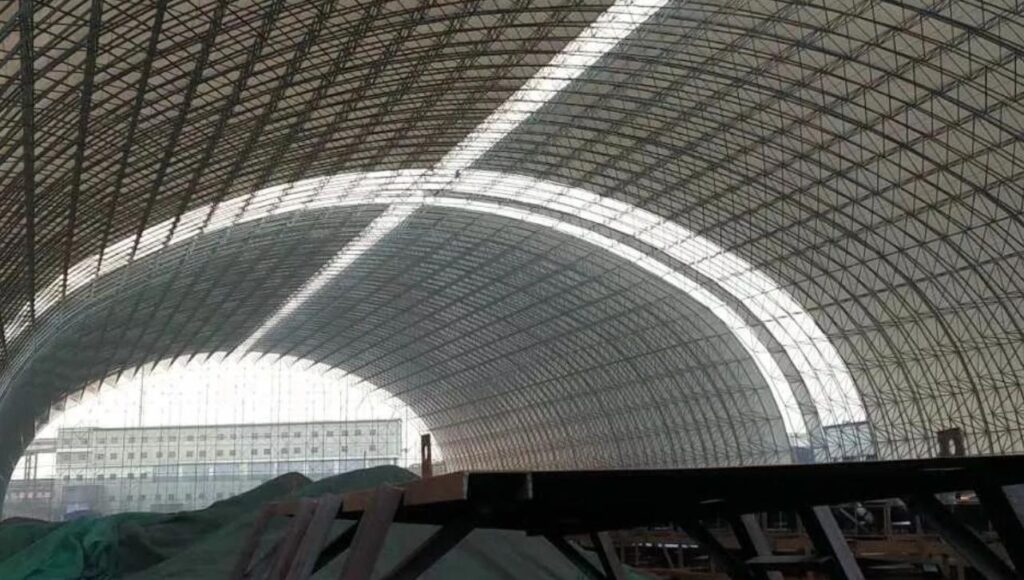
Baru-baru ini, seorang klien dari Indonesia menghubungi kami untuk merancang dan membangun sebuah proyek berskala besar struktur membran tarik untuk penyimpanan batu bara di lokasi pertambangan. Proyek ini mencakup area seluas beberapa ribu meter persegi, yang tidak hanya membutuhkan stabilitas struktural, tetapi juga perlindungan yang sangat baik dari angin, hujan, dan debu. Seiring meningkatnya permintaan akan solusi penyimpanan batu bara yang efisien dan ramah lingkungan di sektor energi dan pertambangan, sangatlah penting untuk memahami apa yang membuat sebuah Gedung Penyimpanan Batubara efektif. Dalam artikel hari ini, saya ingin membagikan wawasan penting mengenai struktur penyimpanan batu bara—mulai dari perbedaan antara desain membran dan desain rangka baja konvensional, hingga faktor-faktor apa saja yang perlu Anda pertimbangkan sebelum memilih suatu solusi, serta mengapa perusahaan seperti Jieol menjadi pelopor di bidang ini.
Mengapa Kita Membutuhkan Gedung Penyimpanan Batubara?
Tempat penimbunan batu bara dikenal sebagai sumber debu dalam jumlah besar, yang tidak hanya memperburuk kualitas udara setempat tetapi juga menimbulkan risiko lingkungan dan kesehatan yang serius. Penyimpanan di ruang terbuka menyulitkan pengendalian emisi tersebut, terutama saat cuaca kering atau berangin. Seiring dengan semakin ketatnya peraturan lingkungan dan semakin pentingnya standar ESG (Lingkungan, Sosial, dan Tata Kelola) di seluruh sektor energi, tempat penyimpanan batu bara tertutup telah menjadi solusi yang sangat penting.
Yang dirancang dengan baik Gedung Penyimpanan Batubara menawarkan berbagai keuntungan. Pertama, hal ini melindungi batu bara dari angin dan hujan, mencegah penyerapan kelembapan yang dapat menimbulkan risiko kebakaran, penurunan nilai kalor, dan kerugian bahan. Dengan menghilangkan kontaminasi air dan penyebaran debu, hal ini membantu para operator mengurangi pencemaran lingkungan dan meningkatkan kebersihan lokasi.
Kedua, struktur tertutup memungkinkan... manajemen persediaan dan keselamatan operasional. Hal ini memungkinkan pengendalian akses yang lebih mudah, perhitungan volume yang lebih akurat, serta pergerakan loader atau sistem konveyor yang lebih aman di dalam lingkungan yang terlindung.
Terakhir, pemerintah daerah di negara-negara seperti Indonesia dan Tiongkok semakin gencar mendorong modernisasi tempat penyimpanan batu bara sebagai bagian dari upaya perbaikan di sektor industri. Penyimpanan batu bara tertutup sering kali diwajibkan dalam izin-izin baru dan penilaian dampak lingkungan.
Singkatnya, pembangunan fasilitas penyimpanan batu bara bukan lagi sekadar investasi opsional—melainkan langkah yang mutlak diperlukan untuk mewujudkan operasi yang berkelanjutan, sesuai peraturan, dan efisien di sektor batu bara dan energi.
Gudang Batubara Berbahan Membran Tahan Tarik vs. Struktur Jaring Baja Konvensional
Dalam hal penyimpanan batu bara, pemilihan solusi struktural yang tepat sangat penting bagi perlindungan lingkungan, keselamatan operasional, dan pengendalian biaya. Gudang batu bara tradisional berbahan rangka baja memang banyak digunakan, namun memiliki sejumlah keterbatasan. Strukturnya yang berat, masa konstruksi yang lebih lama, serta kedap udaranya yang kurang baik membuatnya kurang ideal untuk tempat penyimpanan batu bara modern berskala besar. Sebagai contoh, penyelesaian gudang batu bara berbahan baja dengan luas lebih dari 10.000 meter persegi dapat memakan waktu 6 hingga 8 bulan, sedangkan struktur membran tarik dengan skala yang sama dapat dipasang sepenuhnya hanya dalam waktu 2 bulan, berkat komponen modular dan proses konstruksi yang efisien.
Gudang bermembran tarik juga menawarkan keunggulan yang jelas dalam hal kinerja lingkungan. Membran tersebut menciptakan lingkungan yang tertutup rapat dan bertekanan positif, sehingga mencegah debu batu bara keluar dan debu dari luar masuk. Hal ini secara signifikan meningkatkan kualitas udara di sekitar tempat penyimpanan batu bara dan memenuhi peraturan lingkungan yang lebih ketat. Sifat membran yang tembus cahaya mengurangi kebutuhan akan pencahayaan buatan pada siang hari dan mendukung desain pencahayaan yang hemat energi pada malam hari.
Dari segi biaya, meskipun struktur baja konvensional mungkin tampak lebih ekonomis pada awalnya, struktur tersebut umumnya memerlukan perawatan yang lebih sering, terutama di lingkungan yang korosif. Struktur membran tarik sangat tahan lama, memerlukan perawatan yang minim, dan memiliki biaya siklus hidup yang lebih rendah. Selain itu, struktur ini menawarkan kinerja termal yang lebih baik, estetika desain yang lebih fleksibel, serta ketahanan yang lebih kuat terhadap cuaca ekstrem—seperti topan, gempa bumi, dan salju lebat.
Singkatnya, gudang batu bara dengan membran tarik menawarkan alternatif yang lebih cepat, lebih bersih, lebih aman, dan lebih berkelanjutan dibandingkan solusi penyimpanan batu bara konvensional berbasis rangka baja.
Hal-Hal Penting yang Perlu Dipertimbangkan Saat Memilih Solusi Bangunan Penyimpanan Batubara
Memilih bangunan penyimpanan batu bara yang tepat bukan sekadar memilih sebuah struktur—ini merupakan keputusan strategis yang memengaruhi kepatuhan terhadap peraturan lingkungan, efisiensi operasional, dan pengendalian biaya jangka panjang. Berikut adalah faktor-faktor utama yang perlu dievaluasi sebelum memulai proyek penyimpanan batu bara apa pun.
Pertama, kondisi lokasi memainkan peran yang sangat penting. Luas tempat penimbunan batu bara, ketinggian medan, beban angin setempat, dan aktivitas seismik harus dievaluasi untuk memastikan stabilitas struktur. Misalnya, di wilayah pesisir atau pegunungan, desain harus memperhitungkan ketahanan terhadap topan atau ketangguhan terhadap gempa bumi. Survei topografi yang akurat membantu memandu perencanaan pondasi dan pemasangan jangkar rangka.
Kedua, pemilihan bahan sangat penting baik untuk ketahanan maupun kinerja. Sebagian besar struktur tarik menggunakan bahan berkekuatan tinggi Membran PVC atau PVDF dipadukan dengan rangka baja galvanis atau yang dicat. Bahan-bahan ini tahan terhadap korosi yang disebabkan oleh debu batu bara, kelembapan, dan bahan kimia, sehingga menjamin umur pakai yang panjang dengan perawatan minimal.
Persyaratan rentang dan jarak bebas merupakan pertimbangan penting lainnya. Penyimpanan batu bara sering kali membutuhkan ruang internal yang luas untuk menampung truk pengangkut, konveyor, dan alat penumpuk-pengambil. Struktur tarik dapat mencapai bentang lebih dari 100 meter tanpa kolom internal, sehingga memberikan keleluasaan gerak maksimal bagi alat berat.
Dari segi operasional, keselamatan kebakaran, ventilasi, dan pengendalian debu Sistem-sistem tersebut harus diintegrasikan sejak tahap perancangan. Tekanan udara positif, ventilasi alami, dan sistem penyemprotan kabut membantu mengendalikan kualitas udara serta mengurangi risiko ledakan di ruang tertutup.
Waktu pemasangan dan total biaya proyek juga sangat memengaruhi proses pengambilan keputusan. Struktur membran tarik menawarkan keunggulan yang signifikan dalam hal ini—struktur tersebut dapat diproduksi dan dipasang hanya dalam waktu dua bulan, dengan biaya yang 20–30% lebih rendah dibandingkan opsi rangka baja konvensional.
Studi Kasus: Lokasi Pertambangan di Indonesia, 2024
Pada tahun 2024, seorang klien dari Indonesia menugaskan Jieol untuk merancang fasilitas penyimpanan batu bara bermembran tarik seluas 6.000 m². Lokasi proyek tersebut berada di kawasan dengan kelembapan tinggi, curah hujan yang sering, dan angin kencang. Jieol mengusulkan struktur membran PVDF yang sepenuhnya tertutup dengan sistem ventilasi dan pengendalian debu terintegrasi. Proyek ini diselesaikan hanya dalam waktu 58 hari dan berhasil mengurangi kehilangan batu bara serta keluhan terkait debu yang dialami klien hingga lebih dari 70%. Desain tersebut juga memungkinkan ketinggian langit-langit sebesar 12 meter untuk mengakomodasi truk pengangkut dan konveyor dengan lancar.
Mengapa Jieol Merupakan Kontraktor yang Ideal untuk Bangunan Penyimpanan Batubara
Jieol menonjol sebagai mitra yang tepercaya dan berpengalaman di industri membran tarik. Dengan rekam jejak yang telah terbukti dalam menyediakan struktur membran bentang lebar Di berbagai sektor, mulai dari pertambangan, energi, hingga industri berat, Jieol memiliki keahlian untuk menangani tantangan teknik yang kompleks dengan cepat dan tepat.
Dari mulai dari desain konseptual hingga pembuatan dan pemasangan di lokasi, Jieol menawarkan layanan terintegrasi yang mencakup seluruh proses. Hal ini memperlancar koordinasi proyek, mempersingkat waktu penyelesaian, dan menjamin kualitas yang konsisten di setiap tahap. Jieol hanya menggunakan bahan berkualitas premium seperti membran PVC dan PVDF berkinerja tinggi, yang dipadukan dengan rangka baja tahan korosi. Ditambah dengan teknologi pengencangan mutakhir, struktur-struktur ini menawarkan daya tahan dan ketahanan terhadap cuaca yang sangat baik.
Berkat pengalamannya bekerja sama dengan klien di seluruh Asia, Jieol memahami tuntutan operasional dan persyaratan regulasi dari industri batu bara dan energi. Yang semakin membedakan Jieol adalah... layanan purna jual yang andal, termasuk inspeksi rutin, pemeliharaan membran, dan peningkatan struktural—sehingga memastikan bahwa setiap proyek memberikan kinerja dan keandalan jangka panjang.
Lihat Studi Kasus Realistis Kami yang Lainnya:
| Nama Proyek | Deskripsi | Detail |
|---|---|---|
| Struktur Tarik untuk Supermarket Lagos, Nigeria | Kanopi tarik yang dirancang khusus untuk sebuah supermarket besar di Lagos, yang berfungsi sebagai pelindung dari sinar matahari sekaligus menjadi elemen arsitektur yang mudah dikenali. | 📅 Juni 2025 📐 ~1.200 m² |
| Kanopi Lapangan Olahraga Luar Ruangan Guangdong, Tiongkok | Atap tahan cuaca yang kuat untuk lapangan olahraga umum, yang memadukan fungsionalitas dengan estetika modern. | 📅 Juni 2025 🏟️ Rekreasi |
| Kanopi Jalan Setapak yang Tahan Tarikan Da Nang, Vietnam | Kanopi jalan setapak yang dirancang dengan struktur tarik berkelanjutan, dibangun untuk melindungi pejalan kaki dan mempercantik kawasan perkotaan di wilayah pesisir Da Nang. | 📅 Juni 2025 🚶 Penggunaan Jalur Pejalan Kaki |
| Tempat Berteduh di Taman Berkemah Chiang Mai, Thailand | Kanopi tensile yang elegan seluas 900 m² di sebuah taman perkemahan, menyatu dengan alam sekaligus memberikan perlindungan dari cuaca yang nyaman bagi para wisatawan. | 📅 Juni 2025 📐 900 m² |
| Atap Stadion Bertahan Tarik Surabaya, Indonesia | Atap tarik bentang lebar (3.280 m²) untuk stadion serbaguna, yang memberikan perlindungan sepanjang tahun dengan desain terbuka. | 📅 Juni 2025 📐 3.280 m² |


 Indonesian
  English
  Spanish
  French
  Russian
  Thai
Thai  Arabic
  German